miércoles, 24 de septiembre de 2014

DIGESTIVE SYSTEM

ACTIVITY 1.

Answer the following questions:

1. How long does food stay in your stomach?

2. Does food stay longer in the small intestine or in the large intestine?

3. How long does it take to digest food?

ACTIVITY 2.

1,On the right-hand side find the list of archives.
2.Click on May 2014.
3.You will find some links about the digestive system.
4. Click on each of them and do the activities.

miércoles, 10 de septiembre de 2014

Computer Lab Activities - Science

We are learning about nutrients we need for a healthy diet. You are going to do some activities to test your knowledge.
1. Click on the link below and play the game. When you finish, write on your paper to examples of each type of food: grains, proteins, oil/extras, etc. Remember that oil refers to fat food.

http://www.sheppardsoftware.com/nutritionforkids/games/foodgroupsgame.html

Then, go to the link below as you complete your eat well plate. You have to draw foods that belong in each section. Write the names of each food group.

http://www.nourishinteractive.com/kids/healthy-games/24-my-plate-usda-five-food-groups-healthy-messages


Finally, play a memory game:

http://www.nourishinteractive.com/kids/healthy-games/15-matching-meals-food-groups-game

DON'T FORGET TO WRITE YOUR NAME ON YOUR PAPER!

miércoles, 27 de agosto de 2014

Welcome Third Grade 2014-2015

Welcome to this new School year, I hope that you learn a lot of new things and that you have some fun. 

Here are your first Computer Lab class activities.

First, here are some games to practice math, you need to finish a game to start another, click on the link below:

http://www.funbrain.com/brain/MathBrain/MathBrain.html

Now, read "Galactic Hot Dogs" Start on episode one or "Diary of a Wimpy Kid"  Click on any of the links below:

http://www.funbrain.com/galactichotdogs/index.html 

http://www.funbrain.com/journal/Journal.html?ThisJournalDay=1&ThisPage=1

Practice the multiplication tables at:
 
http://www.kidsnumbers.com/times-tables-games.php

http://www.multiplication.com/games/play/grand-prix


lunes, 23 de junio de 2014

(SCIENCE) CIENCIAS NATURALES SEP EXAM - STUDY GUIDE

Tomorrow we start the SEP evaluation of all the 3rd. grade subjects. As I told you in class it is very important to follow the following suggestions:
1.   Read very carefully, making sure you understand, all the questions and possible answers in the exam.
2.   You may underline your answers in the booklet and then read them again before you put them in the answer sheet.
3.   Take your time! there is no rush to finish fast. 
4.   Remember this exam counts for 15% for your evaluation grade.
5.   Don't forget you need to bring a Berol-Mirado pencil No. 2. 


GUIA DE ESTUDIO EXAMEN SEP
CIENCIAS NATURALES

BLOQUE I  ¿Cómo mantener la salud?
Prevención de accidentes (23-27)
El sistema digestivo, circulatorio y excretor (28-37)
Evaluación y autoevaluación (40-41)

BLOQUE II ¿Cómo somos los seres vivos?
Relación entre los animales y su ambiente. Clasificación en herbívoros, carnívoros, etc., y en vivíparos, ovíparos, etc. (cómo nacen) (45-55)
Satisfacción de necesidades básicas (56-59)
Importancia del cuidado del medio ambiente (60-67)
Evaluación y autoevaluación (70-71)

BLOQUE III  ¿Cómo son los materiales y sus interacciones?
Propiedades de los materiales. Masa y Volumen. Cambios físicos y cambios químicos. Instrumentos de medición (balanza, termómetro, regla). (74-93)
Fuerza, movimiento, fricción.
Evaluación y autoevaluación (100-101)

BLOQUE IV  ¿Qué efectos produce la interacción de las cosas?
Características de la luz y su importancia (105-113)
Interacción de imanes y su aprovechamiento (120-127)
Evaluación y autoevaluación (128-129)

BLOQUE V  ¿Cómo conocemos
Las fases de la luna. Movimientos de rotación y traslación  (132-137)
Evaluación y autoevaluación (143-144)

Try to do all the evaluations at the end of each Bloque. You can find additional information in the link:

Good luck!

miércoles, 18 de junio de 2014

USEFUL SCIENCE INFORMATION-

As we are having our final exam really soon, here  are some tips to study:
I. Vocabulary words. You need to know the meanings of the following words that you  have already copied in your notebooks:
a. matter
b. element
c. periodic table
d. mass
e. density
f. volume
g. atom
h. property
i. buoyancy
j. pressure
k. mixture
l. solution
m. physical property and physical change
n. states of matter
o. chemical property and chemical change

2. Some other words that you need to know:
a. position: the location of an object. Example: Look at the helicopter's position.


b. motion: when an object keeps changing position. Example: Look at the picture. The man is in motion, it keeps changing position.


c. relative position: the position of one object compared with the position of another object. Look at the picture. What is the position of the Moon compared with the position of the Earth?


d. speed: how fast an object changes its position. Look at the picture. How fast do these cars move? There are two types of speed: constant, when it doesn't change and variable, when the speed changes, they can move faster or slower.


 We measure speed using a speedometer: It tells us the number of kilometers a car runs in one hour.


e. potential energy. It is stored energy that can be used to do work. for example, a battery, when you place it in a toy, it can make the toy move. Look at the picture. The ball at the top of the slope doesn't move, but if it is pushed by a force, it can start moving, rolling down the slope.


When the machine is holding the ball, it has potential energy. When it lets the ball fall, it becomes kinetic energy, as it is falling down.


f. kinetic energy. It is the energy of motion. Look at the picture. As you fall down the roller coaster, kinetic energy is responsible for movement.


You may want to try the roller coaster game which lets you try different combinations to create your own roller coaster. Read the instructions carefully so you can play.

http://rollercoastergamesonline.com/roller-coaster-games/digital-labs-coaster-creator

You need to have Java for this one:
http://www.funderstanding.com/educators/coaster/


The following page contains interesting facts about motion, force and velocity:
http://idahoptv.org/dialogue4kids/season12/force_and_motion/facts.cfm

This page also has games and activities. Try the ones about "sound".

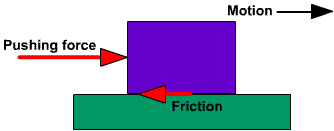
g. friction. It is a contact force that opposes the motion of an object. Friction make objects slow down.


h. vibration. a very quick back-and-forth movement. Vibrations may produce sound. Wind instruments make sounds when air inside them vibrates.


i. compression wave. They are sound waves and look like this:


j. simple machines. Machines help make work easier.  For example:
An inclined plane connects a lower level to a higher level:


A lever is used to lift and move things.


A wedge split helps cut, or connect things.


A pulley changes the direction of how something moves, for example, sailors use them to raise the sail.


II. Check the phases of the moon. What are the waxing phases? what are the waning phases?
Don't forget the names of the planets! 

Good luck!